Showing posts with label Dry Flies. Show all posts

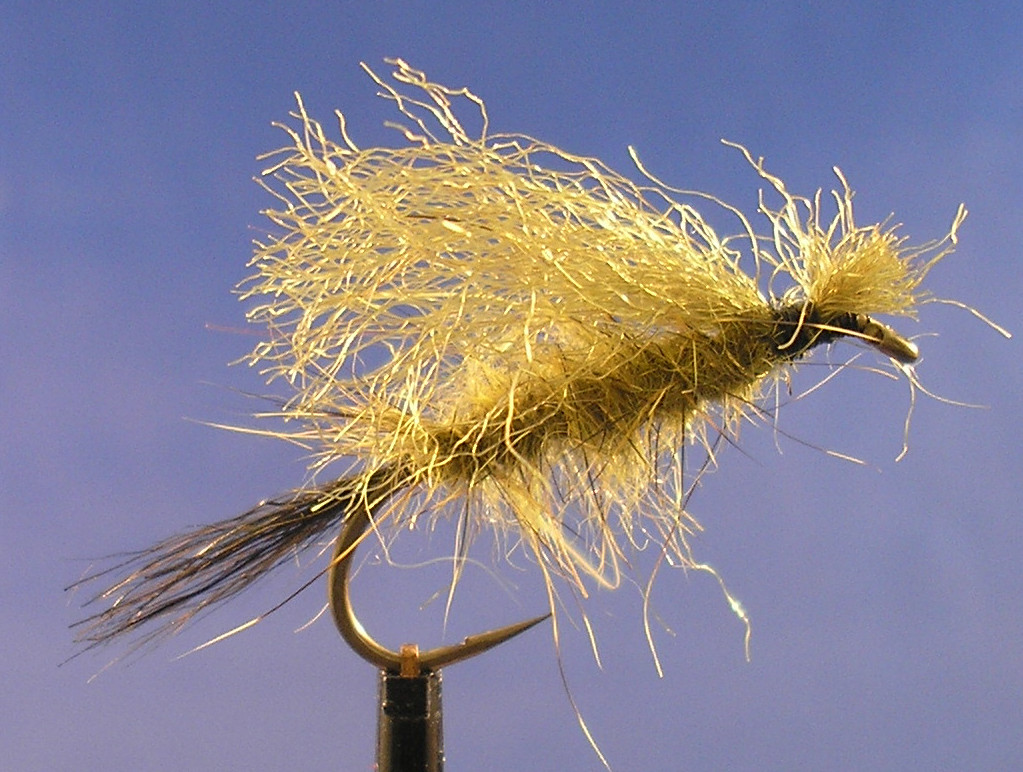
Stimulators

To enlarge double click photo. Use back arrow to return to page.


Yellow and Orange


Yellow and Black


Dry Flies

A Dry Fly Introduction by Dave Hughes

“Dry flies are designed to float on the surface of either moving water or still water and to coax the trout into striking up to take them.”

“Dry flies can be broken roughly into two groups. Searching drys, also called attractor or fancy drys, are designed to fish likely holding water and attract trout when they are not feeding in set rise rhythms and no single natural food form is abundant. Imitative drys are designed to resemble a particular insect species when it is present in dominating numbers and trout are feeding on it selectively.”

(From Essential Trout Flies, by Dave Hughes, published by Stackpole Books, p. 17. Used with permission from Stackpole Books.)

Royal Wulff

Royal Wulff  w/white wings


Wulff Patterns are among the most popular and best searching flies for riffles and runs.


According to Dave Hughes “ A good searching dry fly should be visible and look buggy to trout. It should also ride hide and easy for the fisherman to see.”


Adams when the water is smooth and Royal Wulff when the water is rough.


Hook Standard dry fly sizes 10,12,14,16,
Thread Black
Wings Hi-Vis split, bright colors (white, yellow or oange)
Tail Iridescent make up Brush fibers colored black
Body Peacock herl, red floss, peacock herl
Hackle Dark brown or black
Royal Wulff w/yellow wings

The Adams

    This American fly pattern (designed by Len Halladay of Michigan in 1922 at the request of his close friend Charles Adams) was believed to have originally been a down wing pattern that more closely imitated a caddis. Regardless of it origins, the Adams dry fly is considered by many anglers to be the best dry fly pattern ever conceived.
    The parachute version floats well and lets the body hang below the surface.


Hook Standard dry fly hook sizes 12,14,16,18
Thread Black or brown
Wingpost Hi-vis bright colors
Tail Iridescent make up Brush fibers
Body Adams Grey hares ear or other colors to match
Hackle Grizzly, brown or dun


Parachute Adams


PA1

PA2

PA3
PA4

PA5
Traditional Adams

Adams1
Adams 2


Adams 3

Adams 4


Palmered adams


Red Tag


This traditional fly is probably the first fly that beginners tie. A good general pattern, mostly used as a dry fly pattern. However, the addition of a bead head will make it an excellent pattern for lakes. The traditional method is for the hackle to be placed at the head. I have had better results by palmering the hackle over the body. I also like to use the various glo-bug yarn colors for the tag.

Hook Standard dry fly hook sizes 10, 12, 14, 16
Thread Black or brown
Tail A glo bug tag
Body Peacock herl
Hackle Brown or grizzly palmered over the body


Caddis

Caddis flies are must for your fly box:( the fly, the larvae and the pupae). A great searching pattern like the Adams and Royal Wulff


Hook Standard dry fly sizes 12, 14, 16, 18
Thread Color to match
Body Fur or synthetic dubbing
Ribbing Fine gold or copper wire
Hackle Matching color palmered over body
Wing Natural deer or color to match


Yellow Deer Hair Caddis


White CDC Caddid


Tan CDC Caddis

Deadly Dazzle Caddis
Olive CDC Caddis
Tan CDC Caddis

Midges

Midges (family - chironomidae, order - Diptera) have a complete metamorphosis, egg, nymph, larvae and adult. They’re two-winged insects as adults, hence they’re grouped with Diptera, which means "two wings".

Mosquitoes, gnats, black flies, craneflies and deerflies are all classified as Diptera as well; of them, midges are the most important to trout. In egg form midges are not important as a food source to trout. Once in water the eggs quickly develop into worm-like larvae and grow quickly.

You can get more info about midges and how to fish them in the World Angler Magazine


Emergers


Emerger Flies represent insects as the emerge from the bottom of the water to the surface. As they emerge they are vulnerable to fish. Match the hatch correctly and you're going to have a field day with emerger flies. Some common emergers flies are Caddis Flies and Mayflies.


Hook Standard dry fly size 10, 12, 14, 16, 18
Thread Yellow
Wing Tan or Olive rabbits foot fur
Shuck Brown Darlon
Body Superfine Antron dubbing


Emerger 1
Emerger 2


Emerger 3
Emerger 4


Emerger 5
Emerger 6


Klinkhammer and Shuttlecock

Klinkhammer
     Hans van Klinken devised this fly. The profile is intended to represent a caddis fly emerging or trapped in the meniscus. The body remains underwater and is held up by the hackle which is visible on the surface. I use bright colored parachute posts for better vision in the water. The hackle can be either CDC or a traditional hackle. I prefer the CDC as it looks more buggy and with current cost of decent hackles is more readily available..
     The description "Cul de Canard" is attributed to 1950's era French tier Henry Bresson. In English Cul de Canard translates to "butt of the duck".

Hook Curved Caddis Hook sizes 12, 14, 16, 18
Thread Color match body
Wingpost Hi-vis colors to suit
Tail 4 strands micro Crystal flash
Body Choice of colors and type
Ribbing Copper or colored fine wire
Hackle Match the body color


KH1
KH2


KH3

KH4


Shuttlecock
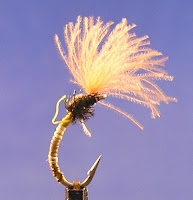
     A variation on the Klinkhammer style of dry fly. Tied without hackle. The wing projects forward and the whole body sinks beneath the surface. It is supposed to mimic a chironomid midge pupa. The shuttle cock hangs under the miniscus and is held up by the CDC wing.

Hook Standard dry fly hook sizes 14, 16 18
Thread Orange
Body Black, olive, brown
Ribbing Pearl lurex or Chrystal flash
Thorax Orange or red
Wing CDC feathers

SC1
SC2


SC3
SC4


SC5
SC6


SC7
SC8